
Election boosts economic activity; Inflation drops to 3.25 per cent as of mid-Feb
Kathmandu / March 11: The House of Representatives election has temporarily boosted economic activity. The election has provided some relief to the economy, which had been affected after attacks on private businesses and vandalism of public property during the Gen Z movement. During the parliamentary election held on March 5, the government and candidates spent billions of rupees.
Economic activities increased as a large amount of money flowed into the market—from mobilizing government employees and security agencies to candidates’ campaign spending. According to National Planning Commission (NPC) Vice-Chair Dr Prakash Kumar Shrestha, the election has increased cash circulation in the market.Electoral Data Analytics
“Elections increase imports and spending, which has a positive impact on the economy,” Shrestha said. “However, such effects are not long-term.” He added that the private sector also appears somewhat encouraged by the expectation that a stable government will be formed after the election. The government had approved Rs 19.11 billion to conduct the election.
Of this amount, Rs 10.39 billion was allocated to the Ministry of Home Affairs, Rs 6.73 billion to the Election Commission (EC), and Rs 1.99 billion to the Ministry of Defence. This amount has already been spent. Although the Election Commission set a spending ceiling for candidates, in practice many candidates spent much more.
Political parties and independent candidates contesting across 165 constituencies spent millions of rupees during their campaigns. The commission had fixed the spending limit between Rs 2.7 million and Rs 3.3 million per candidate. However, it is estimated that candidates from major parties spent between Rs 10 million and Rs 40–50 million.
During major events like elections, a large flow of money into the market increases short-term economic activity. When the government provides allowances, salaries and other benefits to civil servants, security personnel and temporary police deployed for election duties, they spend on daily necessities, transportation, accommodation and other services. This increases demand in local markets.Politics
Similarly, expenses related to mobilizing party workers, organizing rallies and meetings, and conducting door-to-door campaigns increase business for hotels and restaurants, the food sector, vehicle rentals and fuel consumption.
Printing banners, posters, leaflets and pamphlets during campaigns also benefits printing presses as well as paper and design-related businesses. Increased use of vehicles during campaigns boosts income for the transportation sector. Programs organized in various districts also raise demand for hotel and accommodation services.
At the local level, feasts and gatherings organized during campaign events have increased business for farmers and food traders. Such spending increases cash circulation in the market and temporarily boosts economic activity in the trade, service and production sectors. However, these effects are generally short-term, and long-term economic improvement requires increased production and investment.Electoral Data Analytics
Printing presses were particularly busy during the campaign due to demand for banners, posters and pamphlets, increasing income for businesses related to paper, ink and design. Hotels and restaurants also saw more customers as candidates and party workers used them for meetings, training sessions and strategy discussions.
Motorcycles and cars were widely used during the campaign, increasing spending in the fuel and transport rental sectors. Political parties mobilized thousands of workers for door-to-door campaigns, rallies and public gatherings. In some places, communal meals were arranged during election events, which increased demand for food products at the local level.
According to NPC Vice-Chair Shrestha, around Rs 32 billion flowed into the market through the banking system during the election period. In addition, a large amount of money is estimated to have entered the market through informal channels.
Although the government did not allocate a separate budget for the election in the current fiscal year, it managed the expenses by cutting budgets from various development projects. The Ministry of Finance had reportedly frozen projects worth around Rs 120 billion to arrange the required funds.
In the 2079 parliamentary and provincial elections, about Rs 18 billion had been allocated, of which around Rs 16 billion was spent. The actual expenditure for this year’s election will be made public by the EC and security agencies after the vote counting is completed.
Inflation drops to 3.25 per cent as of mid-Feb
Consumer price inflation (CPI) based inflation contained to 3.25 per cent as on mid-Feb on year-on-year basis (YoY).
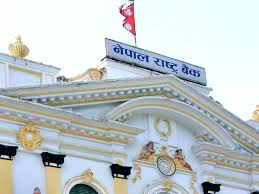
According to the Nepal Rastra Bank (NRB) monthly report released today, in the same period of the previous fiscal year (FY) the inflation was recorded 4.16 per cent. Food and beverage inflation stood at 2.50 per cent whereas non-food and service inflation stood at 3.66 per cent in the review month.
During the same period in the previous year, the price indices of these group had increased 4.95 per cent and 3.74 per cent respectively.
The average inflation stood at 1.92 per cent during the review period of the current fiscal year compared to 4.86 per cent a year ago.
Under the food and beverage category, y-o-y price index of vegetable sub-category increased 11.63 per cent, ghee & oil 7.61 per cent and fruit 7.14 per cent while y-o-y indices of pulses & legumes sub-category decreased 5.19 per cent, cereal grain & their products 2.97 per cent and spices 2.61 per cent.
Under the non-food and services category, y-o-y price index of miscellaneous good & services sub-category increased 21.98 per cent, education 7.46 per cent, clothes and footwear 5.28 per cent, tobacco products 4.15 per cent and alcoholic drinks 3.85 per cent while y-o-y price index of communication sub-category decreased 0.08 per cent.
The NRB report showed that during the review month, y-o-y price index in rural areas increased 2.52 per cent while in urban areas, it rose 3.51 per cent.
The report showed that remittance inflows increased 39.8 per cent to Rs 126.01 billion in the seven months of 2025/26 compared to an increase of 7.5 per cent in the same period of the previous year. During mid-January to mid-February (Magh month), remittance inflows stood at Rs 198.08 billion. In the same period of the previous year, such inflows were Rs.137.50 billion.
During the seven months of 2025/26, merchandise exports increased 32.2 per cent to Rs 168.15 billion compared to a growth of 46.5 per cent in the same period of the previous year.
During the seven months of 2025/26, merchandise imports increased 13.6 per cent to Rs 1123.49 billion compared to a growth of 10.1 per cent a year ago.