
NRNA 12th Global Conference: Bureaucracy Hindering Investment of Diaspora Earnings in Nepal; Government Vigilant on West Asian Conflict
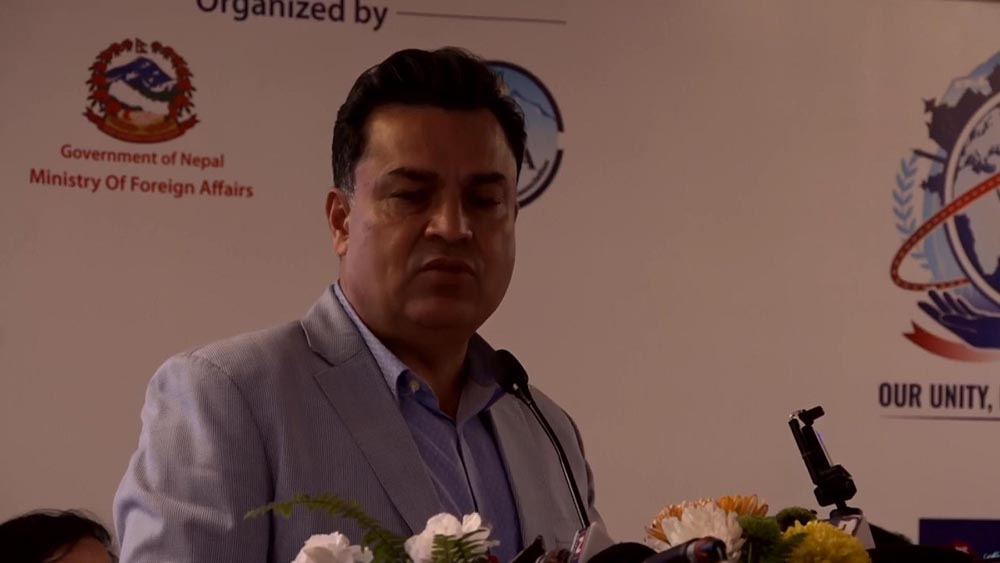
Kathmandu / March 14: The President of the Non-Resident Nepali Association (NRNA), Badri KC, has expressed concern that government bureaucracy has become a major obstacle for Nepalis living abroad who wish to invest their hard-earned income in Nepal.
Speaking at the NRNA’s 12th Global Conference on Saturday, President KC urged the government to create a conducive investment environment and immediately remove legal barriers that discourage diaspora investment. He said that while the government often seeks foreign investment, it should also facilitate investment from Nepalis themselves.
According to KC, existing laws that set minimum and maximum investment limits have created difficulties for Non-Resident Nepalis who want to bring their capital into the country.
“Is there a limit even to money? The money earned through blood and sweat abroad should be allowed to be invested in our own homeland to help build national prosperity,” he said. “We are not trying to take the profits from our investment abroad immediately. We want our children to study here, build homes, and buy vehicles here. Why should there be barriers to bringing our money into the country?”
KC also expressed strong dissatisfaction with the working style of government ministries and the bureaucracy, stating that the NRN Nepal Development Fund, which was launched five years ago with a target of Rs 10 billion, has still not moved forward due to the absence of a simple government document.
He claimed that the fund managed to collect Rs 370 million within just 15 days of launching a campaign and that the full Rs 10 billion could have been raised within a month if there had been no administrative hurdles.
During the event, KC further complained that the Non-Resident Nepali citizenship introduced about two and a half years ago has remained largely ineffective because legislation clarifying the rights associated with the citizenship has not yet been enacted. He urged the government to pass the relevant law through Parliament within the government’s 100-day programme and implement it without delay.
He also conveyed that the NRNA, which had previously been divided into three factions, has now reunified and called on all Non-Resident Nepalis to help preserve this unity.
Government Alert to West Asian Conflict
Meanwhile, Nepal’s Interim Government Foreign Minister Balananda Sharma said the government is closely monitoring the instability and conflicts unfolding in West Asia and other parts of the world.
Addressing the same conference, Minister Sharma emphasized that the safety and welfare of Nepali citizens living and working abroad remain a top priority for the government.
He noted that recent developments in the Middle East have affected air services in the region, which has directly impacted the movement of Nepali citizens.
To respond quickly to potential emergencies, Sharma said the Ministry of Foreign Affairs Nepal has already established an Emergency Control Room. The facility will serve as a coordination and information-sharing bridge between Nepali citizens living abroad and their families in Nepal.
Through the control room, the ministry will help maintain communication with Nepalis overseas and coordinate assistance if required.
Minister Sharma also urged Nepali citizens residing in West Asia to remain in contact with their nearest Nepali embassy and promptly inform authorities if they encounter any difficulties.
He further acknowledged the important role played by the NRNA in supporting and protecting the interests of Nepali citizens abroad during challenging circumstances.