
Excess liquidity defies policy easing
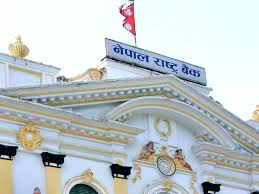
Kathmandu / Mar. 9: Nepal’s banking system has been experiencing a prolonged phase of excess liquidity even as monetary policy remains accommodative, according to the latest semiannual macroeconomic report published by the Nepal Rastra Bank (NRB).
The central bank regularly monitors liquidity in the financial system to contain volatility and guide short-term market interest rates.
Based on this monitoring, the NRB’s Open Market Operations Committee (OMOC) conducts open market operations (OMOs) with banks and financial institutions (BFIs) to either inject or absorb liquidity.
These operations aim to stabilise short-term domestic market interest rates, particularly the interbank rate and the treasury bills rate, aligning them with the central bank’s monetary policy stance.
Over the past two decades, Nepal’s liquidity conditions have alternated between surplus and shortage.
The banking system experienced notable excess liquidity during 2014–2015, followed by a significant liquidity shortage between 2021-2023.
Since 2023, the financial system has been continuously accumulating excess liquidity, denoted by the inverted bars of liquidity absorption toward the end and the upsurge in liquidity in the banking system.
Recently, the banking system is witnessing a longer liquidity cycle after 2015, with 2022-23 being a period of shortage, followed by excess in 2024-25, and a contentious influx, said the report.
Pandemic shock and policy response
The economic slowdown triggered by the COVID-19 pandemic led the NRB to adopt an expansionary monetary policy.
Similar to other central banks worldwide, the NRB introduced unconventional policy measures, including refinancing facilities, to support businesses and sustain economic activity.
Such measures provided an immediate relief to the economy, with businesses able to run smoothly as usual. However, the policy easing could not be fully absorbed by the market, especially in productive sectors, said the NRB.
Instead, it was partially reflected in the asset prices, with a record stock market index and real estate prices. At the same time, Nepal’s external sector started to be adversely affected due to the lowered export, tourist income and foreign aid, while imports were soaring.
On the other hand, the supply disruptions soared the inflation globally, with world consumer prices soaring to 8.7 per cent in 2022.
This was reflected on Nepal’s consumer price as well, with the inflation reaching 8.6 per cent in September 2022 from 3.5 per cent in September 2021.
Furthermore, Nepal experienced pressure on its external sector, with the BoP in deficit since June 2021, and foreign reserves depleting to as low as 6.6 months of imports in January 2021.
In response, the NRB implemented a series of tightening measures through both monetary policy and macroprudential regulations. The policy rate was increased from 3 per cent in June 2021 to 7 per cent by September 2022, alongside measures to curb rapid credit growth.
The pass-through of the policy measures remained immediately effective, but with sluggish pickup afterwards.
The interest rates, with the lending rate up, surged to 13 per cent in 2023 February, inflation started moderating, and foreign exchange reserves gradually bounced back.
Return to policy easing
After the gradual decline in inflation and improvements in the external sectors, the NRB followed its easing monetary stance since June 2023, gradually lowering the policy rate, downsizing its interest rate corridor.
The stances were accommodative but cautious, in both monetary and macroprudential tools. The easing path continues still today, as Nepal witnessed a continuous fall in inflation and a record foreign exchange reserve, but sluggish aggregate demand, said the NRB.
The accommodative policy stances, however, did not translate to the economy.
The financial system started accumulating excess liquidity in early 2023, continuing to reach its new highs, boosted by the post-COVID rebound and recovery, as well as growth in remittances.
The excess reserves of BFIs at the central bank, including mandatory cash reserve, reached a historically high level, crossing Rs. 1.20 trillion in December 2025.
The lending rates remain historically low, yet credit growth remains quite low compared to the NRB projections.