
Tarai records highest inflation despite production advantage
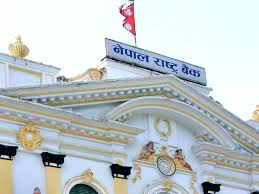
Kathmandu / March 15: The Tarai, long regarded as Nepal’s food basket and a hub for agricultural and industrial production with easy access to cross-border markets, has recorded the highest inflation in the country, according to a report by the Nepal Rastra Bank.
The central bank’s latest data shows that Madhesh Province posted the highest year-on-year inflation at 5.14 percent in mid-February compared to the same period a year ago, while Karnali Province recorded the lowest inflation at 1.62 percent.
According to the report, Koshi Province saw year-on-year consumer inflation of 3.53 percent, followed by Bagmati Province at 3.10 percent, Lumbini Province at 3.29 percent, Gandaki Province at 2.42 percent and Sudurpashchim Province at 1.64 percent.
Economists say inflation is typically expected to be higher in hilly and mountainous regions because of higher transportation costs and limited supply chains, while the Tarai—with its proximity to India, fertile farmland and relatively lower logistics costs—should normally experience lower inflation.
However, the higher inflation in Madhesh Province suggests that Nepal’s market, production and supply systems are not functioning efficiently, economists say.
The Tarai is the country’s main production centre, where most industries are located and agricultural output is high. In theory, as economist Chandra Mani Adhikari said, higher production should lead to greater supply and lower prices.
Nepal also imports more than 60 percent of its goods from India, and most of these goods enter the country through border points in the Tarai.
“Given this structure, inflation in Madhesh should normally be lower than in other provinces,” Adhikari said.
“But the opposite situation—higher inflation in Madhesh—shows that the supply system in the province is not functioning properly and that government oversight has not effectively reached the area.”
According to him, the situation indicates that economic fundamentals alone are not determining prices in the region and that other structural or administrative factors may be influencing the market.
“The government needs to correct this, but it will be a challenging task,” he said.
Agricultural shocks may also have contributed to rising prices in parts of the Tarai.
Data from the agriculture ministry shows that Koshi, Madhesh and Bagmati provinces were among the hardest hit by the early October rainfall, which damaged paddy and vegetable crops last year.
On October 27, heavy pre-winter rains submerged harvest-ready paddy in several Tarai districts, destroying months of farmers’ labour. In many areas, paddy left in the fields to dry after harvesting was washed away, leaving farmers with little or no income for the year.
Economists say the impact of such crop losses can ripple through local markets, pushing up food prices and contributing to regional inflation.
From a socio-economic perspective, the rising prices pose a serious concern for Madhesh Province, where incomes are among the lowest in the country and poverty rates remain high.
Experts say inflation in such conditions worsens the living standards of already vulnerable households.
Per capita income in Madhesh is the lowest among the provinces, and a large number of people live below the poverty line. If inflation rises further, it will make livelihoods even more difficult.
A proper study and targeted policy measures are required to understand the root causes of the higher inflation in Madhesh and to improve economic conditions in the province.
Nepal’s official poverty line for 2022–23 set the annual per capita threshold at Rs72,908. However, in rural Madhesh, the average annual expenditure per person stood slightly lower at Rs71,828, making it the region with the lowest capacity to meet basic needs in the country.
The Nepal Living Standards Survey also shows a stark disparity in living costs. While a person in Kathmandu requires Rs129,934 annually to cover essential expenses, a person in rural Madhesh manages with less than half that amount.
Against this backdrop, experts say small enterprises and microbusinesses could play a crucial role in reducing poverty, particularly if supported by reliable infrastructure such as electricity.
Economists say that since most of the country’s production and trade take place in the Tarai, costs such as construction and transportation are generally lower there.
For instance, building a house in the Tarai typically costs less than in the hills or mountainous areas because of easier access to materials and lower transportation expenses.
Overall, Nepal’s year-on-year consumer price inflation stood at 3.25 percent in mid-February, down from 4.16 percent in the same period a year earlier.
Food and beverage inflation stood at 2.50 percent, while non-food and services inflation reached 3.66 percent during the review month.
Within the food and beverage category, the price index for vegetables rose 11.63 percent year-on-year. Prices of ghee and oil increased by 7.61 percent, and fruits by 7.41 percent.
However, prices declined in some sub-categories, with pulses and legumes falling by 5.19 percent, cereal grains and their products by 2.97 percent, and spices by 2.61 percent.
Under the non-food and services category, the price index for miscellaneous goods and services increased by 21.98 percent. Education costs rose by 7.46 percent, clothes and footwear by 5.28 percent, tobacco products by 4.15 percent, and alcoholic drinks by 3.85 percent.
During the review month, the year-on-year price index in rural areas increased by 2.52 percent, while in urban areas it rose by 3.51 percent.
Economists also warned that global geopolitical tensions could further push up inflation in Nepal.
They say the escalating conflict in West Asia has already begun affecting global prices, and the impact may gradually be felt in Nepal’s domestic market.
“The inflationary pressure has started to show since last month as a result of the West Asian conflict,” Adhikari said.